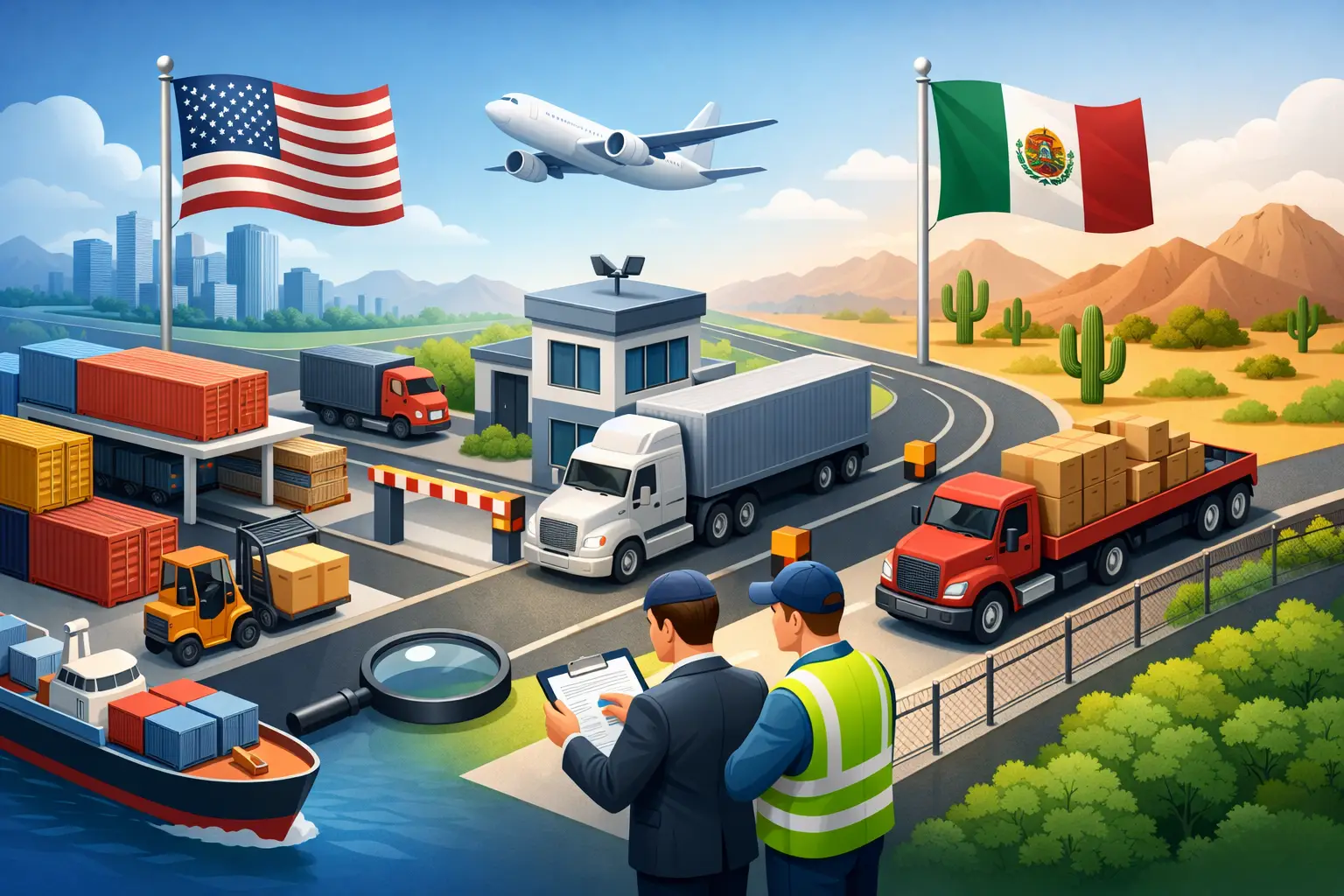
A trailer can be loaded correctly, priced correctly, and dispatched on time - then still lose a day at the border because the customs workflow was built around handoffs instead of control. That is why choosing a us mexico customs broker is not a procurement detail. It is an operating decision that affects transit time, compliance exposure, labor efficiency, and customer service on both sides of the border.
For importers and logistics teams moving regular freight between Mexico and the United States, the old model breaks down fast. One broker handles the US entry. Another handles the Mexico side. A carrier manages linehaul. A drayage partner covers the transfer. Documents move through inboxes, spreadsheets, and phone calls. When something goes wrong, everyone can explain their part, but no one owns the full move.
That structure creates delay even when every vendor is competent. The issue is not effort. The issue is fragmentation.
What a US Mexico customs broker should actually solve
A broker in this corridor is not just filing entries. The real job is controlling the customs sequence so freight keeps moving. That means getting commercial documents early, validating data before the truck arrives, aligning classification and valuation details, coordinating pedimento timing, and making sure release events connect to transportation execution instead of sitting in separate systems.
On paper, customs brokerage sounds administrative. In practice, it is operational. If the broker receives incomplete invoices, inconsistent part descriptions, or last-minute changes to shipper data, those issues immediately become border risk. If the broker is disconnected from the carrier or drayage team, release status may be correct in one place and useless everywhere else.
A strong us mexico customs broker reduces that risk by tightening the workflow before the shipment hits the port of entry. The difference is less about who can file and more about who can prevent avoidable exceptions.
The real cost of a fragmented border process
Most teams do not feel the cost of a poor border setup as a single line item. They feel it as constant friction.
Your transportation team chases document status because customs updates are sitting with a separate provider. Your warehouse shifts receiving plans because ETA confidence is weak. Your customer service team over-communicates to compensate for missing milestones. Your customs team spends time cleaning up data that should have been validated earlier. None of that appears on a rate sheet, but it shows up in labor, inventory exposure, missed appointments, and carrier detention.
This is where many companies misjudge broker selection. They compare brokerage fees without measuring the total operating impact. A lower filing cost means very little if the process depends on manual rekeying, late document review, or multiple vendor escalations before release.
Cross-border freight punishes delay in small increments. Twenty minutes lost waiting on corrected paperwork. Two hours lost because the carrier and broker are not aligned on shipment identifiers. A half day lost because a classification issue surfaced after arrival instead of before dispatch. The border does not need a dramatic failure to become expensive.
How to evaluate a US Mexico customs broker
The first question is not coverage. It is workflow ownership.
If your broker only handles a filing event, you still own the coordination burden. That may work for low-volume shippers with stable freight and plenty of internal bandwidth. It usually fails for higher-volume programs, time-sensitive replenishment, or operations running multiple plants, suppliers, and consignees across the corridor.
Ask how shipment data enters the process. If your team has to log into a separate portal, upload documents manually, and reformat paperwork to match broker requirements, you are adding labor before the customs work even starts. Ask how documents are reviewed, how missing fields are flagged, how classification data is maintained, and when exceptions are surfaced.
Then ask the harder question: who controls the move once customs touches transportation? If the US filing, Mexico handling, drayage, and final-mile communication all sit with different parties, you still have handoff risk. If one partner can manage the sequence from origin documents through border crossing to final delivery, you gain something more valuable than convenience. You gain accountability.
Brokerage alone is often not enough
Many importers assume customs problems are customs problems and trucking problems are trucking problems. On the US-Mexico border, that separation is often artificial.
A shipment can be customs-ready and still delayed because the drayage handoff was not synchronized. It can clear one side while the next leg lacks the right release visibility. It can move physically while the document chain lags behind. These are not rare edge cases. They are normal failure points in disconnected cross-border operations.
That is why the better model is integrated execution. When brokerage, transportation coordination, and document handling work inside one operating flow, you remove the waiting that comes from vendor-to-vendor communication. You also reduce the blame cycle that starts whenever a load misses its planned crossing window.
This does not mean every shipper needs an all-in-one provider for every lane. It depends on shipment volume, commodity complexity, and internal team capability. But if your current model requires daily follow-up across brokers, carriers, and warehouses, the issue is structural. More status calls will not fix it.
Technology matters, but only if it reduces work
Plenty of providers claim visibility. Fewer reduce actual operational effort.
For customs teams and logistics managers, the useful question is simple: does the technology eliminate manual steps, or does it just relocate them? A platform that requires your team to change workflows, learn a new system, and feed data into another queue is not really automation. It is additional process wrapped in software.
In cross-border customs, the most effective technology works upstream. It captures documents where they already arrive, extracts the required data, validates it against customs requirements, and pushes entries forward without forcing your team into another portal. That is where speed comes from. Not better dashboards after the delay, but fewer touchpoints before the filing.
This is especially important for teams managing recurring freight from multiple suppliers. Repetitive document handling is where labor piles up and error rates creep in. If the system can recognize patterns, flag exceptions, and process the routine work automatically, your team gets more time for actual control. That is a meaningful advantage in a corridor where timing and accuracy are linked.
What good execution looks like at the border
Good border execution is usually quiet. The documents are received early. Data issues are caught before pickup or before the truck reaches the crossing. Customs entries and pedimentos are aligned to the shipment plan. The carrier, drayage leg, and warehouse all have the same operating picture. When an exception does happen, one team owns the fix and communicates it clearly.
That is what sophisticated shippers are really buying when they look for a broker. Not just compliance, and not just speed. They are buying predictability.
Predictability matters more than perfect transit times because operations can plan around a stable process. They cannot plan around uncertainty. A shipment that crosses consistently in a known window is easier to schedule than one that is occasionally fast and occasionally stuck for reasons no one can explain.
This is why experienced operators look beyond license credentials and branch locations. Those matter. They are not enough. The better questions are about exception rates, document intake, pre-arrival review, release communication, and ownership across the full movement.
When to change your current broker setup
Not every delay means your broker is failing. Border operations are affected by inspections, government systems, commodity rules, and seasonal volume shifts. Some variability is normal.
But there are patterns that signal a bad setup. Your team is constantly chasing status. The same document issues repeat by supplier. Customs and transportation milestones do not match. Border delays are explained only after the fact. No one can show you where time was lost in the process. Those are not random problems. They are signs of poor workflow control.
If that sounds familiar, the fix is usually not a stricter SOP sent to all parties. It is a different operating model.
A provider built for the corridor should be able to handle US entry filing, Mexico customs coordination, document automation, and shipment execution inside one accountable flow. That is the model BorderFlow was built around because the border does not reward partial ownership. It rewards teams that can see the full sequence and act on it early.
The best broker relationship is the one your team does not have to manage load by load. When customs, transportation, and communication run in sync, the border stops being a daily fire drill and becomes just another controlled part of the network.