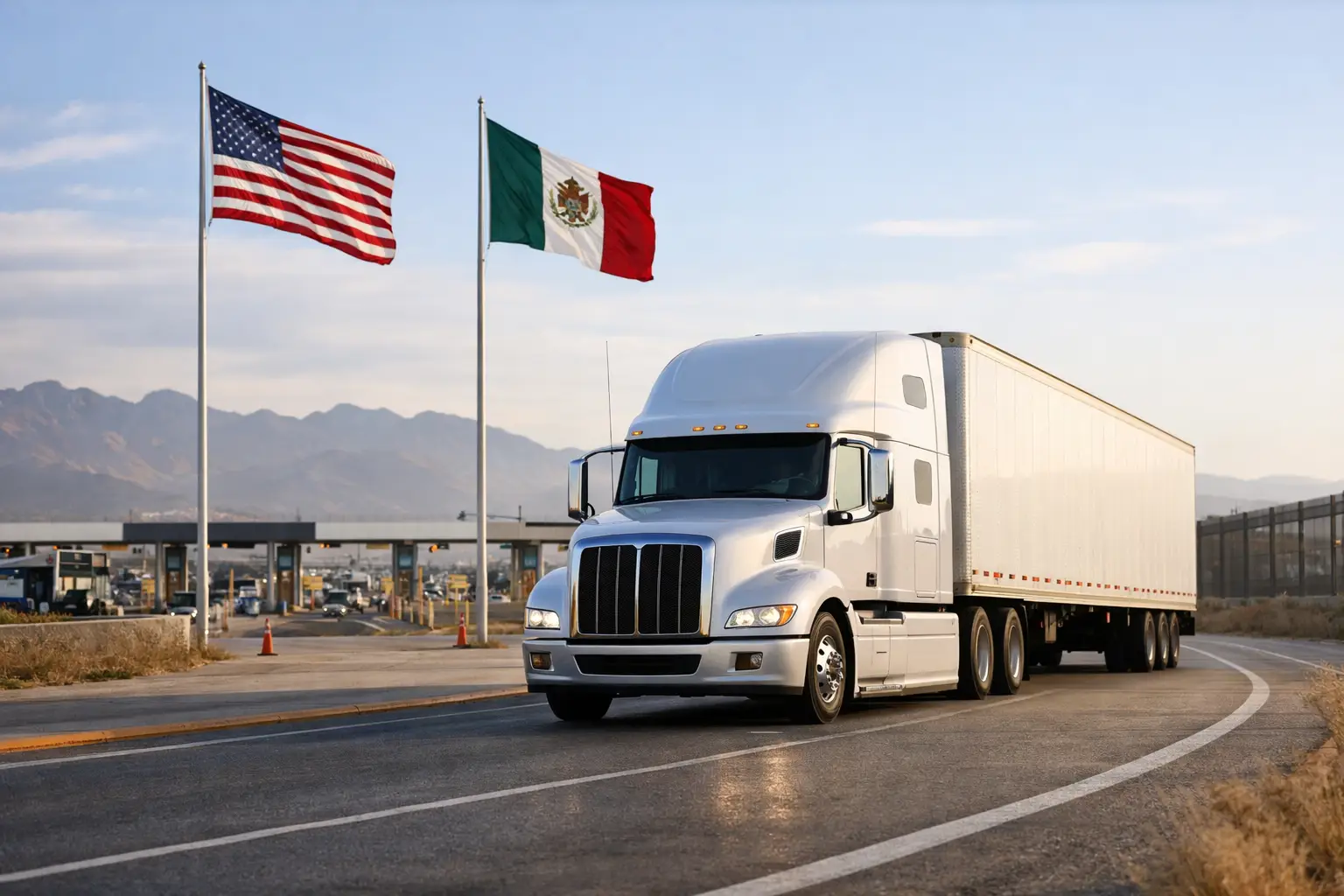
If your truck is on time to the border but your entry data is wrong, the shipment is still late. That is the reality of cross border trucking services in the US-Mexico corridor. Freight does not fail only on the road. It fails at handoffs, in inboxes, at customs review, and in the gap between the broker, carrier, drayage provider, and warehouse.
That is why the quality of a cross-border move is rarely about trucking alone. It is about whether transportation and customs are being run as one operation. When they are not, small document errors turn into detention, missed appointments, production downtime, and expensive exception management.
What cross border trucking services actually include
For many shippers, the phrase sounds straightforward. A truck picks up in Mexico, crosses the border, and delivers in the United States, or the reverse. In practice, there are several controlled steps inside that move, and each one has to line up.
A typical shipment may involve origin pickup, export preparation, linehaul to the border, customs filing, drayage or transfer, import clearance, trailer interchange or transload, and final delivery. Depending on the lane, commodity, and security requirements, that process may run as through-trailer, cross-dock, or drop-and-hook. FTL and LTL each introduce their own planning constraints.
The point is simple: cross border trucking is not one service. It is a sequence. If those steps are managed by separate parties using different systems and different assumptions, the shipment becomes harder to control with every handoff.
Why cross border trucking services break down
The biggest problems are usually operational, not theoretical. A commercial invoice arrives late. The PO data does not match the packing list. The carrier is ready, but the customs team is still waiting on a document revision. The drayage leg gets booked without clear visibility into release timing. Someone is working from yesterday's version of the shipment details.
None of this is unusual. It is what happens when execution is fragmented.
Border freight is especially sensitive to timing because customs and transportation operate on shared deadlines. If import data is incomplete, the truck cannot move as planned. If the truck arrives before clearance is ready, dwell starts to build. If the freight is selected for review or needs a correction, every downstream appointment gets tighter.
This is also why the cheapest transportation quote can turn into the most expensive shipment. A lower linehaul rate does not help if the move generates storage, detention, lost production time, or customer service escalations.
The real requirement: one workflow, not four vendors
Shippers moving regular freight across the border usually reach the same conclusion after enough painful shipments: the issue is not whether they have a carrier, a customs broker, and a drayage provider. The issue is whether those functions are coordinated in one workflow with one accountable operating model.
That does not always mean using one legal entity for every task. But it does mean the shipment should be executed as one controlled process. Document intake, classification, entry filing, dispatch timing, and delivery execution need to follow the same data and the same clock.
When that alignment exists, teams spend less time chasing status and more time managing real exceptions. The difference is immediate. Instead of asking three vendors what happened, the shipper gets a single operational answer tied to the current stage of the move.
What good cross border execution looks like
The best cross border trucking services are built around predictability. That starts before pickup.
Shipment data should be captured early and validated against customs requirements before the truck is in motion. Commercial invoices, packing lists, product details, and shipper-consignee information should not be moving through a loose email chain with manual rekeying at every step. The more often humans re-enter the same data, the more likely something breaks.
From there, the transportation plan should reflect the customs plan. If a shipment needs drayage through Laredo, the drayage leg should be timed to actual filing and release status, not a rough estimate. If the freight is high-volume or time-sensitive, exception logic should be defined in advance. Who gets alerted? What is the fallback if the release window shifts? Which warehouse needs updated ETA first?
Visibility matters here, but not as a dashboard for its own sake. Visibility is useful when it helps operators make faster decisions. A shipment status that says in transit is not enough. Teams need to know whether documents were received, whether entry data is complete, whether customs was filed, whether release has occurred, and whether the linehaul and delivery legs are still aligned.
Where technology helps and where it does not
Cross-border teams are right to be skeptical of software claims. Most operations do not need another portal, another password, or another implementation project that forces everyone to change how they already communicate.
The useful role of technology in cross border trucking services is narrower and more practical. It should reduce manual work, speed up customs readiness, and create cleaner operational control without adding friction. That means pulling usable shipment data from the documents customers already send, structuring it correctly, and moving it into customs and transportation workflows fast.
If a system can extract invoice data from email attachments, flag missing elements, support classification, and trigger entry preparation without forcing the shipper into a new process, that is operational value. If it can also keep dispatch, brokerage, and customer teams working from the same shipment record, even better.
Technology is not a replacement for brokerage judgment or carrier execution. It is a control layer. The point is fewer handoff gaps, fewer preventable delays, and faster response when a shipment goes off plan.
Choosing a provider for cross border trucking services
Most shippers do not need a flashy pitch. They need to know whether a provider can control the move under pressure.
Start by looking at how the provider handles customs coordination, not just transportation procurement. Ask who owns import filing, how document intake works, how corrections are handled, and what happens when a shipment reaches the border before the paperwork is ready. If those answers are vague, expect friction.
Then look at network control. Does the provider actually manage drayage, transload, and delivery coordination, or are they stitching together subcontractors with limited visibility? There is nothing wrong with using partner capacity. The risk comes when the operating model is too loose to maintain accountability.
You should also ask how updates are delivered. Many teams are tired of chasing status through emails, texts, and separate broker messages. The best providers do not just provide updates. They provide operational clarity tied to the actual milestones that matter.
One more point: industry fit matters. Automotive, industrial, consumer goods, electronics, and food-grade freight each have different urgency, documentation patterns, and handling requirements. A provider that understands your commodity profile will usually spot risk earlier.
Why US-Mexico freight rewards tight operators
The US-Mexico lane is not forgiving of loose process. Volumes are high, manufacturing schedules are tight, and border events compound quickly. A missed document on a Thursday afternoon can ripple into warehouse congestion, rescheduled labor, and a Monday stockout.
That is why operator-led execution stands out. Teams that understand the border as a live workflow - not a series of disconnected services - make better decisions. They know when to press for documents, when to stage drayage, when to hold a truck, and when to escalate before the issue becomes expensive.
In markets like Laredo, where border throughput and timing discipline matter every day, this is not theory. It is the difference between controlled freight and reactive freight.
BorderFlow is built around that operating reality. The model is straightforward: customs orchestration, brokerage execution, drayage, and trucking in one managed workflow, supported by automation that works through the customer's existing email flow rather than forcing a new portal.
The smarter way to think about service levels
Shippers often compare cross border trucking services on transit time and price. Those matter, but they are incomplete measures.
A more useful question is this: how often does the provider deliver the shipment without creating extra work for your team? A move that arrives on time after fifteen follow-ups, three document chases, and a last-minute customs fix is not truly efficient. It is barely recovered.
Service quality at the border should be measured by control. Was the shipment customs-ready before pickup? Were milestones visible? Did the delivery plan stay aligned with release timing? Were exceptions managed early enough to protect the appointment or production schedule?
Those are the metrics that reduce noise inside a logistics team. They also make growth easier, because a repeatable process scales better than a heroic one.
The border will always have complexity. The goal is not to pretend otherwise. The goal is to run that complexity through a system that keeps freight moving, compliance intact, and your team out of constant recovery mode.